
Every time you make hung curd, something important happens in the background.
As the curd thickens, a pale yellow liquid slowly separates and collects below. If you use a muslin cloth, it drips into the sink. If you use a yogurt strainer, it gathers neatly in the outer container.
Most people throw it away immediately.
That liquid is whey.
And in most Indian kitchens, it is one of the most overlooked ingredients we routinely waste.
A single batch of hung curd can easily produce 300–400ml of whey — enough to knead dough, improve dosa batter, enrich dal, or make a refreshing summer drink.
The interesting part is this:
Whey is not just “leftover water.” It still contains:
- minerals,
- natural milk compounds,
- small amounts of protein,
- and mild acidity that makes it surprisingly useful in cooking.
Once you start collecting it intentionally, you realize it can become part of your regular kitchen workflow instead of something that disappears down the drain.
Quick Takeaway
If you only remember three things from this article, remember these:
- Whey from hung curd is safe and useful for cooking.
- It works especially well in roti dough, dosa batter, curries, and smoothies.
- The easiest way to reuse whey is to collect it properly while straining curd.
What Is Whey From Hung Curd?
When curd is strained to make hung curd, two things separate:
- the thick solids remain behind,
- while the liquid portion drains away.
That liquid is called acid whey.
It contains:
- water,
- residual lactose,
- minerals like calcium and potassium,
- small amounts of milk proteins,
- and naturally occurring compounds from fermented dairy.
Its mild tang comes from lactic acid formed during fermentation.
Also Read: How to Make Hung Curd Without Muslin Cloth
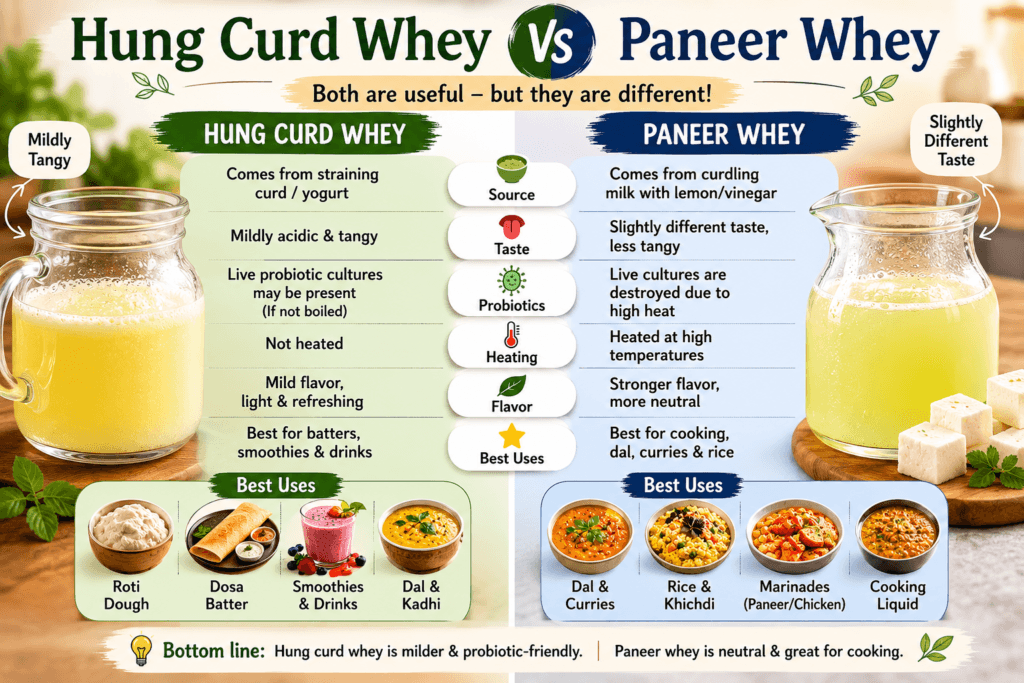
Hung Curd Whey vs Paneer Whey — Are They Different?
Yes.
This is one of the biggest points of confusion.
Hung Curd Whey
This comes from straining fermented curd or yogurt.
It is:
- mildly acidic,
- tangy,
- and may still contain live bacterial cultures if uncooked.
Paneer Whey
Paneer whey is produced when milk is curdled using lemon juice or vinegar during heating.
Because it is heated at high temperatures:
- most live cultures are destroyed,
- and the flavor is slightly different.
Both types of whey are useful in cooking, but curd whey is generally milder and more suitable for fermented dishes like dosa batter or smoothies.
Is Whey the Same as Whey Protein Powder?
No.
This is another common misunderstanding.
Commercial whey protein powder is made through industrial processing, filtration, concentration, and drying of whey from large-scale cheesemaking.
The whey left after making hung curd is very different.
It still contains useful nutrients and small amounts of high-quality milk proteins, but the protein concentration is much lower than gym-style whey protein powder.
Think of curd whey as:
- a nutritious kitchen ingredient,
not - a concentrated sports supplement.
What Does Whey Taste Like?
Whey is mildly tangy and slightly sour.
Some people describe it as:
- diluted chaas,
- thin yogurt water,
- or mildly tart milk water.
The flavor becomes more noticeable if the original curd was already sour.
If you are new to using whey in cooking, start by replacing only part of the water in recipes until you get comfortable with the taste.
How Long Does Whey Last?
Store whey in a clean sealed container in the refrigerator.
It is best used within:
- 5–7 days.
You can also freeze it in small portions or ice cube trays for later use.
10 Practical Ways to Use Whey in an Indian Kitchen

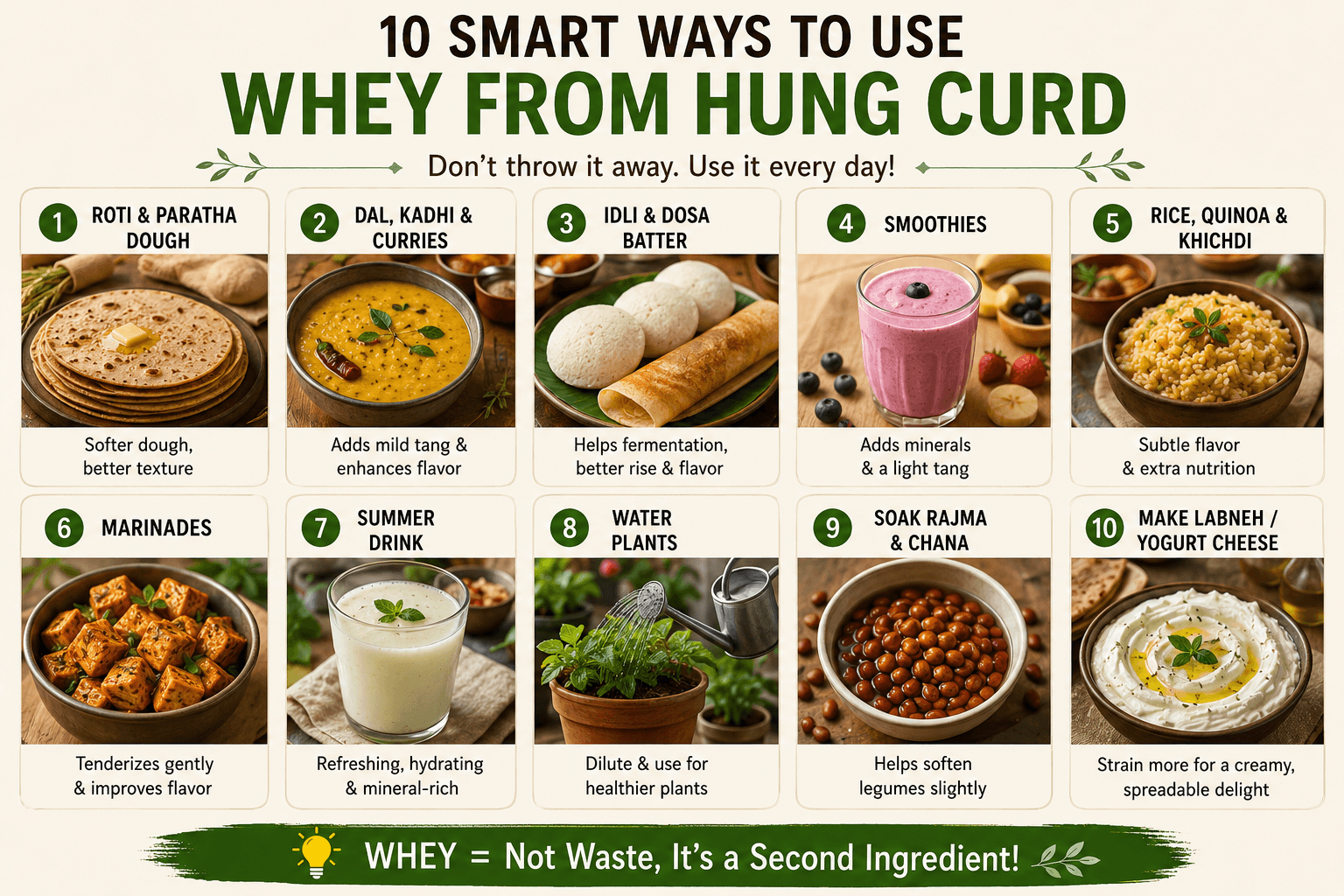
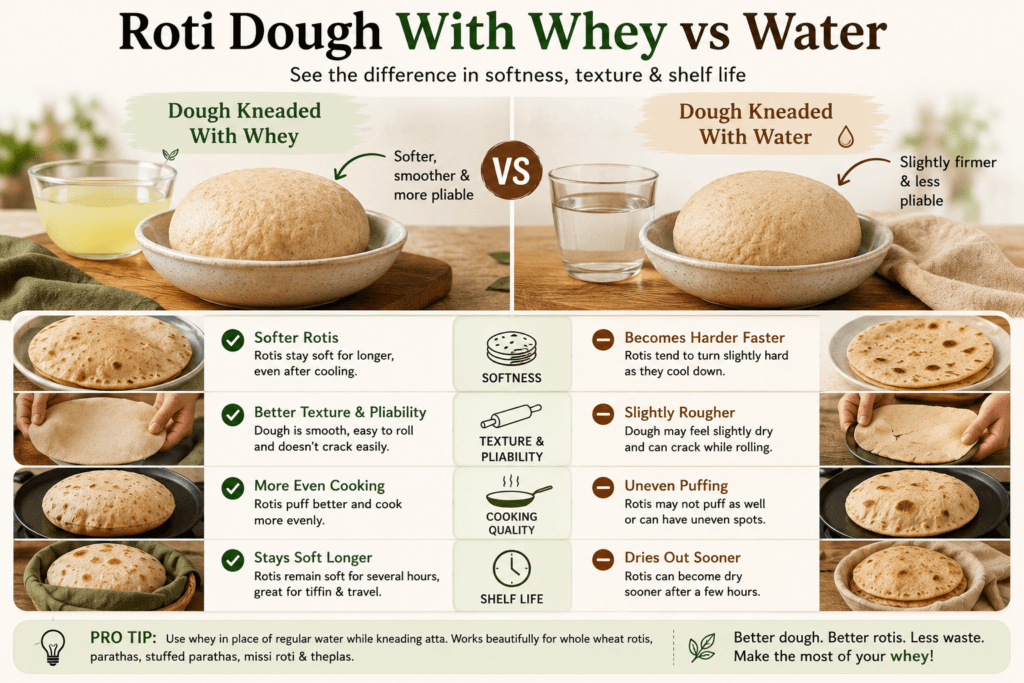
1. Use It for Roti and Paratha Dough
This is probably the best and easiest use.
Replace regular water with whey while kneading dough.
The mild acidity helps create softer, smoother dough that stays soft longer after cooking.
Many people notice:
- softer rotis,
- more pliable dough,
- and better texture in parathas.
This works especially well with:
- whole wheat atta,
- methi parathas,
- stuffed parathas,
- and missi roti.
If you try only one whey use from this article, start here.
2. Add It to Dal, Kadhi, and Curries
Whey works beautifully in Indian cooking because mild tanginess already exists in many dishes.
You can:
- replace part of the water in dal,
- add it to kadhi,
- or use small amounts in gravies.
It works especially well in:
- moong dal,
- kadhi,
- palak dal,
- and light curry bases.
Pro Tip for Kadhi
If your kadhi tastes too mild or your dahi is not sour enough, adding a little whey gives it a more traditional tang without adding extra curd or fat.
If you are new to cooking with whey, start with:
- half whey,
- half water.
3. Help Idli and Dosa Batter Ferment Better
Because whey comes from fermented curd, it can help support batter fermentation.
Add:
- 2–3 tablespoons of whey
to dosa or idli batter while fermenting.
This is especially useful during winter or in cooler kitchens where fermentation slows down.
The result is often:
- better rise,
- more consistent fermentation,
- and improved flavor.
Important Note
If whey is later boiled or cooked, the live cultures do not survive high heat. However, the minerals and acidity remain useful in cooking.
4. Add It to Smoothies
Whey works surprisingly well in smoothies.
You can replace:
- water,
- or part of the milk
with chilled whey.
It adds:
- mild tanginess,
- minerals,
- and a small nutritional boost.
Good combinations include:
- banana + peanut butter,
- mango smoothies,
- berry smoothies,
- or chocolate-banana blends.
Because whey is thinner than milk, smoothies often feel lighter and more refreshing.
5. Cook Rice, Quinoa, or Khichdi in It
You can use whey instead of part of the cooking water for:
- rice,
- quinoa,
- oats,
- or khichdi.
The flavor difference is subtle, but the mild acidity works particularly well in savory dishes.
Khichdi benefits especially because the slight tang complements moong dal naturally.
6. Use It in Marinades
The natural acidity in whey makes it useful for marinades.
You can add small amounts to:
- paneer tikka marinades,
- vegetable marinades,
- or chicken marinades.
It helps:
- tenderize gently,
- improve flavor absorption,
- and loosen thick marinades without making them watery.
Compared to lemon juice or vinegar, whey gives a softer and milder acidity.
7. Make a Simple Summer Drink
One of the easiest ways to use whey is simply to drink it.
Mix:
- 1 part whey,
- 2 parts chilled water,
- black salt,
- roasted jeera powder,
- and a squeeze of lemon.
The result tastes similar to a light chaas or savory summer cooler.
It naturally contains minerals like potassium and calcium, which are commonly lost through sweating during hot weather.
8. Water Plants With Diluted Whey
Whey can also be used in gardening when diluted properly.
Mix:
- 1 part whey,
- with 5 parts water.
Some home gardeners use it occasionally for:
- curry leaf plants,
- chillies,
- tomatoes,
- and flowering plants.
The minerals and mild acidity may help support healthier soil conditions.
Do not use whey too frequently or in concentrated form.
9. Soak Rajma and Chana in It
Some people soak:
- rajma,
- chana,
- or dried peas
using part whey and part water.
The mild acidity may help soften the outer layer of legumes slightly before cooking.
The flavor change is minimal after pressure cooking.
10. Make Thick Yogurt Cheese or Labneh
If you continue straining hung curd even further, you eventually get something very close to labneh — a thick Middle Eastern yogurt cheese.
It becomes:
- creamy,
- spreadable,
- and excellent with herbs or spices.
This is not an everyday Indian kitchen use, but it shows how versatile strained dairy can become.

Can You Drink Whey Directly?
Yes.
Many people drink chilled whey directly, especially during summer.
Because it is mildly acidic, some people prefer:
- diluting it,
- adding salt,
- or mixing it into smoothies.
If the whey smells unpleasant or overly sharp, discard it.
Why Collecting Whey Properly Matters

Most households never build the habit of using whey because they never properly collect it in the first place.
With muslin cloth straining:
- whey drips away,
- gets wasted,
- and is inconvenient to save.
Also Read: How to Make Hung Curd Without Muslin Cloth
A refrigerator-friendly yogurt strainer changes that completely.
The ZIVANCA Greek Yogurt Strainer collects whey neatly in its outer container while the curd strains above.
That means:
- no dripping,
- no mess,
- and no wasted whey.
Once the whey is visible and easy to store, people naturally start using it more often.
What previously felt like “waste” starts becoming a useful kitchen ingredient.

Also Read: Hung Curd vs Greek Yogurt — Are They the Same Thing?
Frequently Asked Questions (FAQs)
Whey contains minerals, natural dairy compounds, and small amounts of protein. It can be a useful addition to everyday cooking when used as part of a balanced diet.
Yes. Whey freezes well in small portions or ice cube trays.
No. Whey still contains lactose, often more than the hung curd itself.
People with mild lactose sensitivity may tolerate small amounts, but those with severe lactose intolerance should be cautious.
Boiling destroys live bacterial cultures, but minerals and acidity still remain useful for cooking.
Yes, in moderate amounts. Whey can be mixed into smoothies, dough, or dal as part of regular meals.
Yes, many households use small amounts regularly in dough, batters, and cooking liquids.
The Bottom Line
Whey is not just leftover liquid from making hung curd.
It is a second usable ingredient from the same batch of dahi.
And once you begin treating it that way, the entire process of making hung curd becomes more efficient, economical, and less wasteful.
Instead of:
- losing nutrients down the sink,
you begin: - recovering them,
- reusing them,
- and integrating them into everyday cooking.
The easiest way to build that habit is to collect whey properly from the beginning.
A dedicated yogurt strainer makes that simple by separating curd and whey cleanly inside the refrigerator — without the mess of muslin cloth.
Also Read: Why Muslin Cloth Is the Wrong Way to Make Hung Curd (And What Works Better)
If you regularly make hung curd at home, a good strainer does not just help you make thicker curd.
It helps you use the entire process more intelligently.