

What Exactly Is Hung Curd?
If you’ve ever eaten a creamy dip, a rich dessert, or even a soft cheesecake, chances are you’ve already tasted hung curd. But what exactly is it?
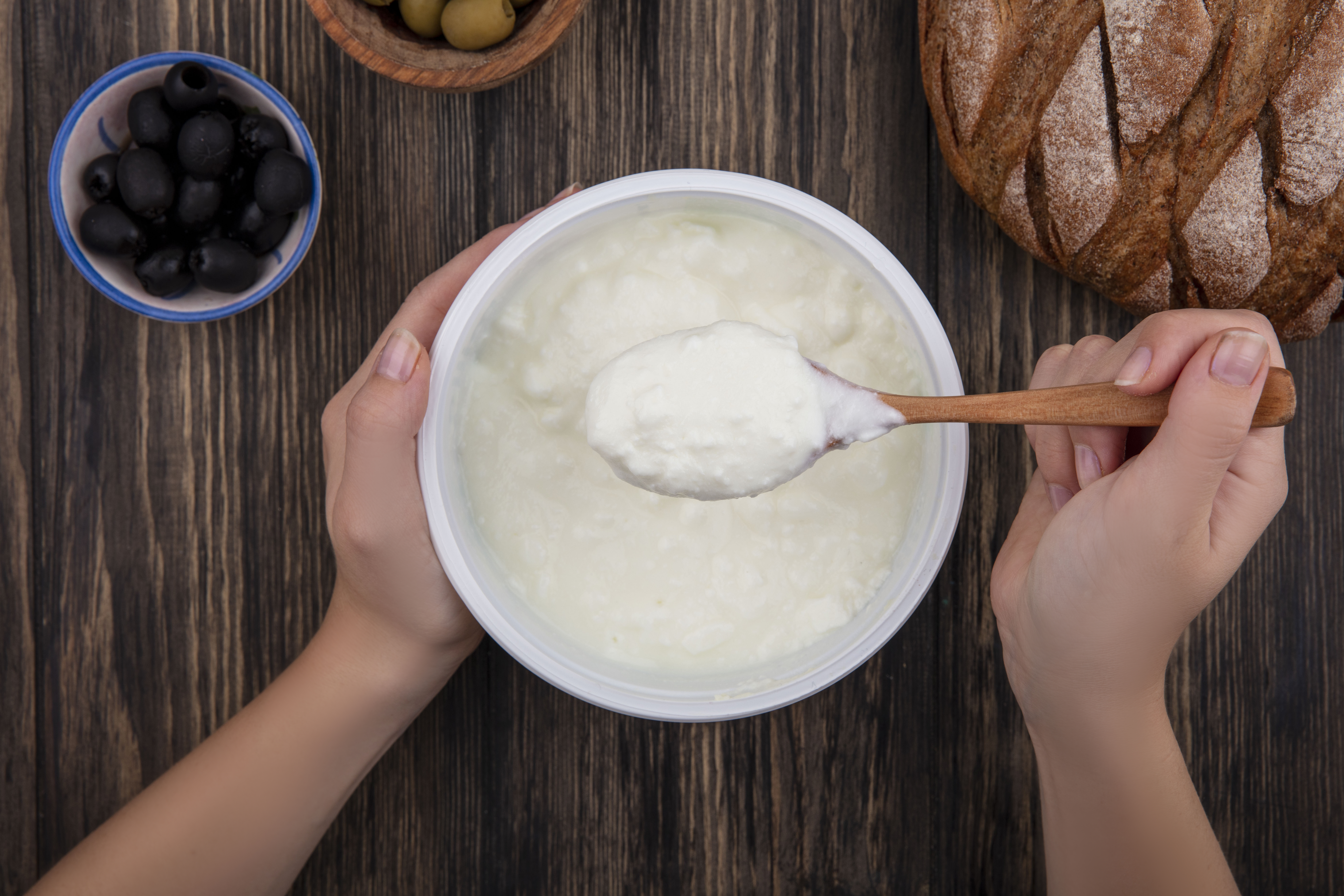
Hung curd is simply curd (dahi) with its water — called whey — removed. Once the excess liquid drains, you’re left with a thick, smooth, and velvety yogurt base.
It’s denser, richer in taste, and much more versatile in cooking than regular curd.
You can think of it as the Indian cousin of Greek yogurt — both are strained to remove whey and both are packed with protein.
Why Do We Strain Curd?
When curd is made at home, it contains a lot of moisture. This water (whey) gives curd its light texture but can make recipes watery or runny.
By straining it, we:
- Get a thicker, creamier texture
- Increase the protein concentration naturally
- Make curd easier to use in recipes like raita, spreads, dips, and desserts
So, hung curd isn’t a fancy food trend — it’s just good old curd made better!
Hung Curd vs Regular Curd – What’s the Difference?
| Feature | Regular Curd | Hung Curd |
|---|---|---|
| Texture | Watery, loose | Thick, creamy |
| Water Content | High | Low (strained out) |
| Protein Density | Lower | Higher |
| Taste | Mild, slightly tangy | Rich and concentrated |
| Best Used For | Everyday meals | Dips, desserts, sandwiches, cooking |
In short — hung curd is just curd with less water and more goodness.
How to Make Hung Curd at Home (Traditional Method)
The traditional way of making hung curd uses a muslin cloth or a fine cotton cloth. It’s simple but can get a bit messy.
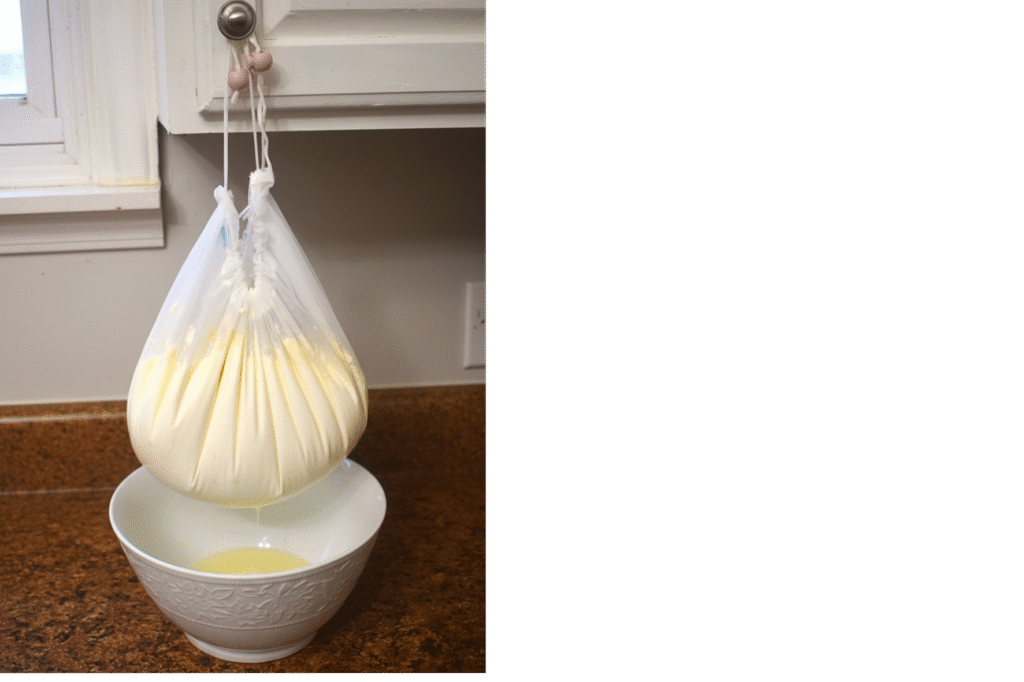
Here’s the step-by-step:
🥄 You’ll Need:
- 2–3 cups of fresh curd
- A muslin cloth or cotton handkerchief
- A bowl to collect the whey
- A refrigerator (for safe straining)
Steps:
- Spread the cloth over a bowl and pour the curd into it.
- Gather the edges of the cloth and tie them tightly to make a bundle.
- Hang the bundle over the bowl or kitchen sink. The whey will start dripping out.
- Let it strain for 3–4 hours (depending on how thick you want it).
- Once most of the water has drained, transfer the curd to a clean container and refrigerate.
You’ll now have beautifully thick hung curd — ready for cooking or snacking.
The Drawbacks of Using Muslin Cloth
While the traditional method works, it’s not always convenient.
- The cloth becomes messy and needs washing after every use.
- Hanging the curd can be tricky (and sometimes drips everywhere).
- You can’t easily control the amount of straining.
If you love making hung curd often, this can become tedious. That’s where a modern yogurt strainer makes life easier.
A Simpler, Cleaner Way to Make Hung Curd
A yogurt strainer (like the Zivanca Greek Yogurt Strainer) does all the work without the mess.
It comes with a fine stainless steel mesh and a BPA-free container that collects the whey neatly.
Here’s how easy it is:
- Pour your fresh curd into the strainer.
- Cover it and place it in the refrigerator.
- Wait 3–4 hours (or overnight for a thicker texture).
- That’s it — your hung curd is ready, perfectly strained and smooth.
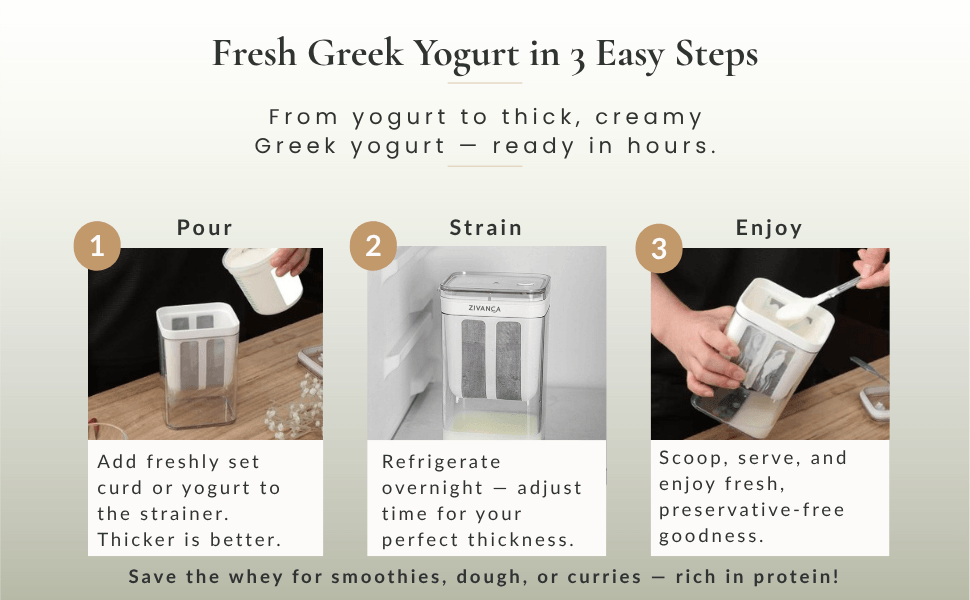
No cloth, no dripping, no cleanup hassle.
It’s hygienic, reusable, and saves time — ideal for everyday use in Indian kitchens.
Health Benefits of Hung Curd

Hung curd isn’t just tasty — it’s packed with health benefits too.
- High in protein: Excellent for muscle repair and weight management.
- Low in carbs and fat: Great for light, healthy eating.
- Rich in probiotics: Supports digestion and gut health.
- Calcium-rich: Strengthens bones and teeth.
It’s an easy way to add nutrition to your diet without processed foods.
Delicious Ways to Use Hung Curd
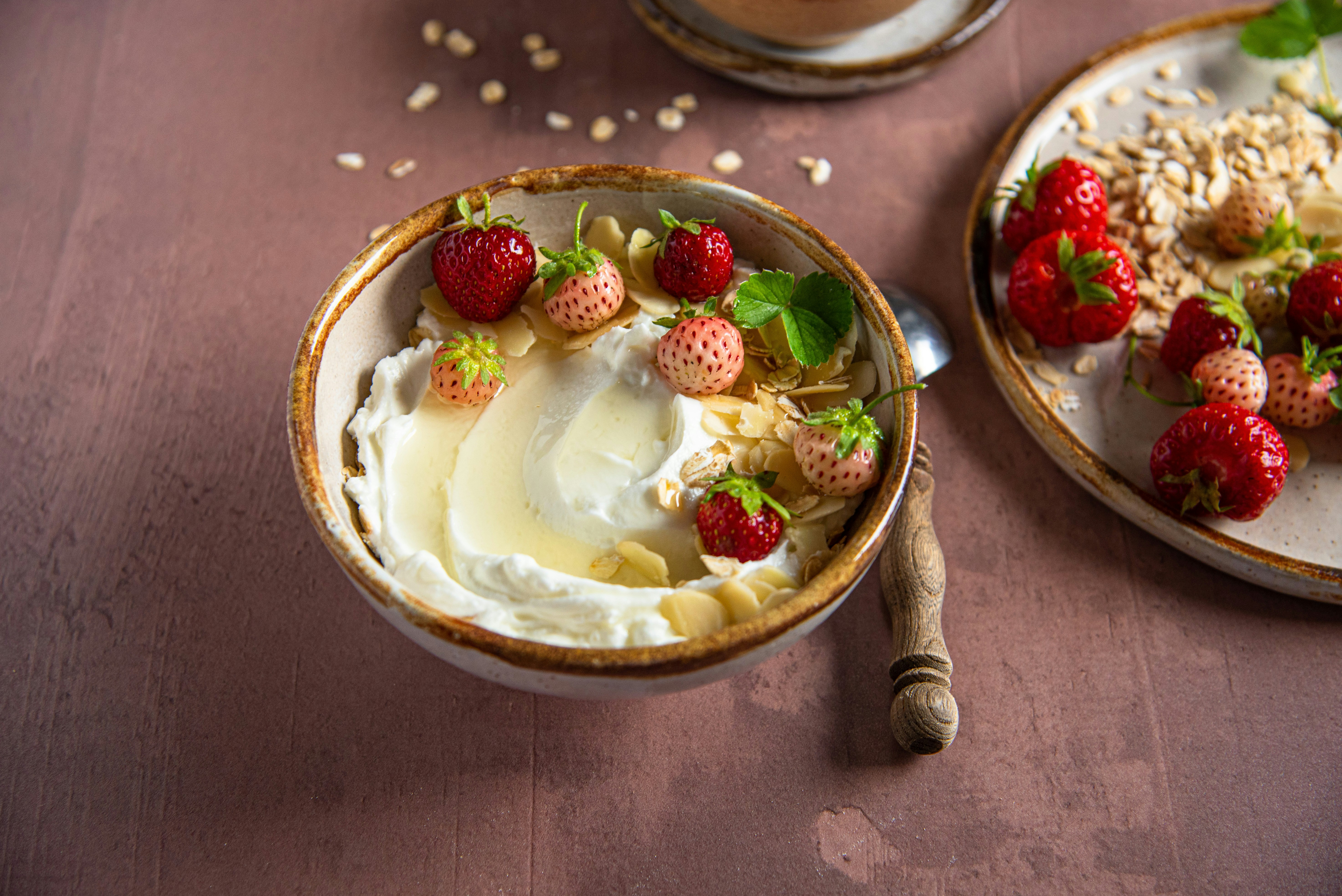
Once you have thick, creamy hung curd ready, you can use it in:
- Dips: Mix with herbs and garlic for a Greek-style dip.
- Sandwich spreads: Replace mayonnaise with hung curd for a healthier option.
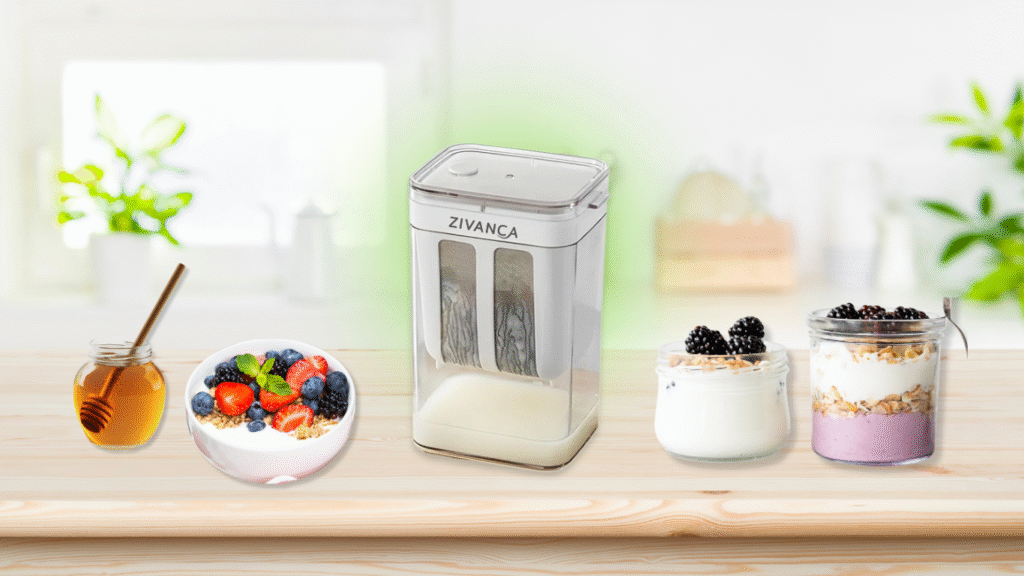
- Desserts: Make shrikhand, cheesecakes, or yogurt parfaits.
- Salad dressings: Add lemon juice, salt, and olive oil for a tangy touch.
It’s a wonderfully versatile ingredient that upgrades everyday meals.
Pro Tip
Keep the leftover whey — it’s rich in protein and nutrients. You can use it in smoothies, soups, or dough for rotis. Nothing goes to waste!
Final Thoughts
Hung curd is one of those simple, traditional foods that perfectly balances taste and health.
Whether you’re into fitness, healthy eating, or love creamy food, it’s a must-have in your kitchen.
And if you want to skip the messy cloth process, the Zivanca Greek Yogurt Strainer makes it effortless.
Just pour, strain, and enjoy — fresh, hygienic, and ready whenever you are.
Includes Recipe eBook – Strain & Savor
Unlock 25+ vegetarian recipes curated for your Greek yogurt & hung curd adventures.
Available instantly via QR code inside the box.
No sign-up required.
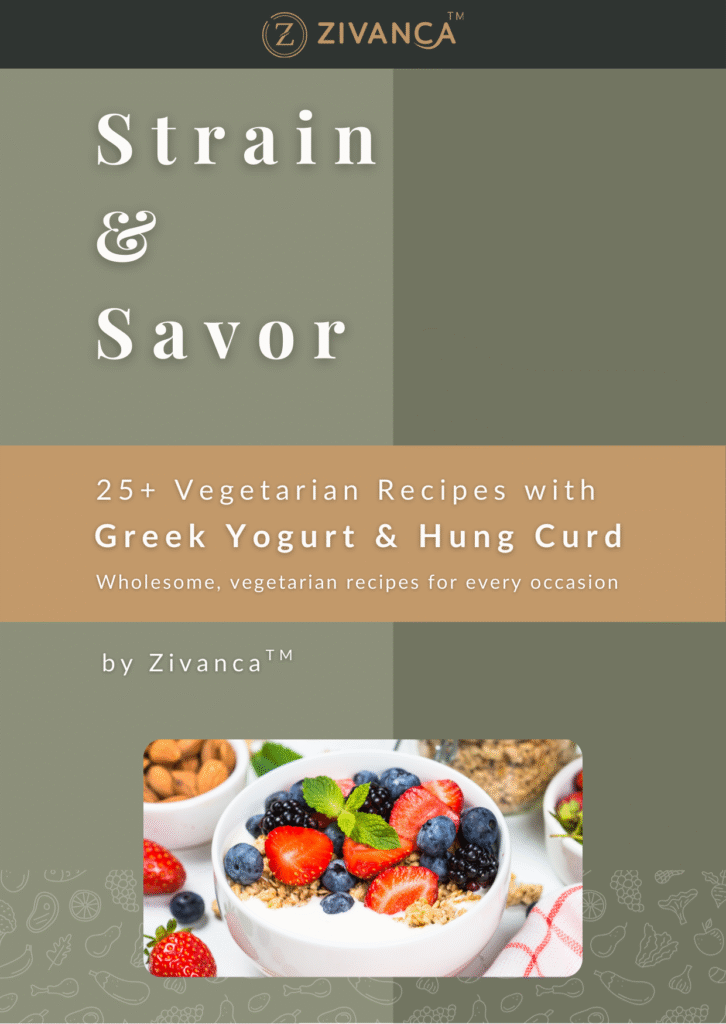
- Breakfasts, snacks, dips, salads, mains & desserts
- High-protein, vegetarian, gut-friendly recipes
- Includes yogurt flavoring tips, storage hacks & more
Frequently Asked Questions (FAQs)
They’re very similar — both are made by straining regular curd or yogurt to remove whey. Greek yogurt is just a slightly thicker version.
Typically, 3–4 hours in the fridge gives a soft texture. Overnight straining gives a thick, Greek yogurt-like consistency.
Yes! Low-fat curd works perfectly and results in a lighter, healthier version.
You can use it in smoothies, knead dough, or water plants — it’s packed with nutrients.